Build with AI 2026: Building AI Agents in Kotlin
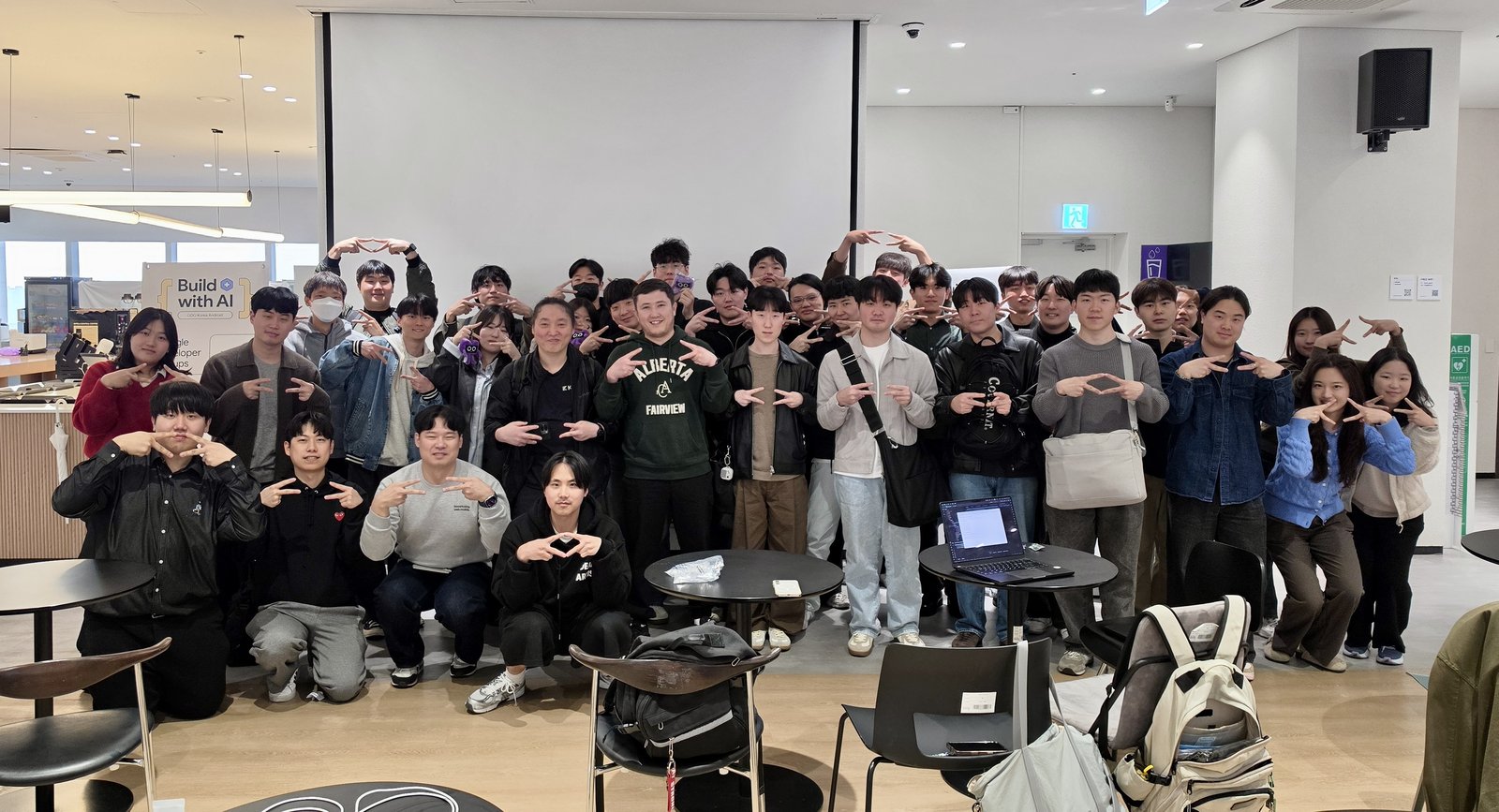
Build with AI 2026 — GDG Korea Android, Seoul. 📸
I recently attended Build with AI 2026 — GDG Korea Android here in Seoul, and honestly? It was one of those days that reminds me why I love being a developer. No endless keynote slides, no buzzword bingo — just a room full of people with their laptops open, actually building things together. Let me walk you through how it went.
A room full of builders
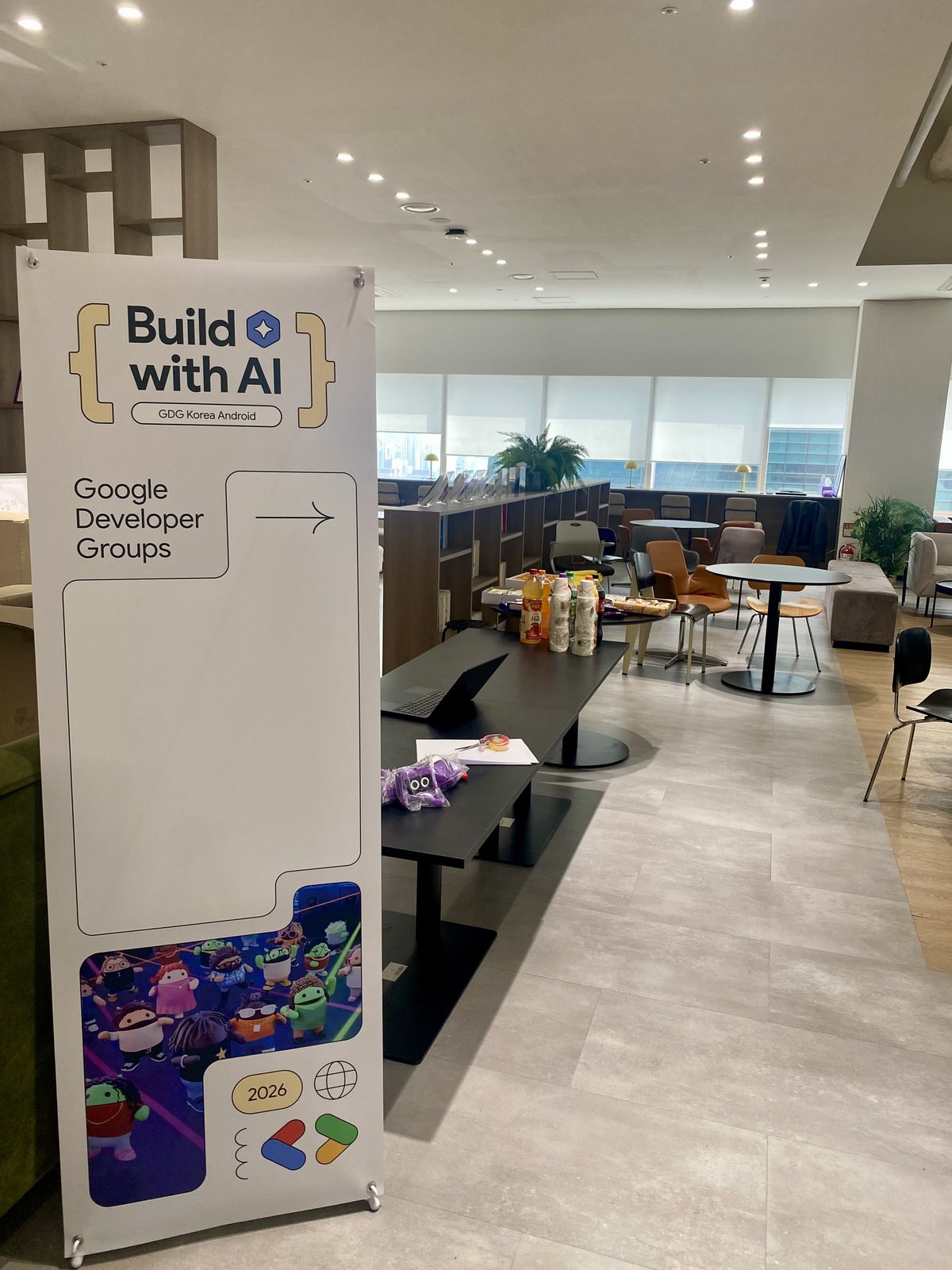
The Build with AI banner greeting everyone at the door.
You could feel the energy the moment you walked in — the Build with AI banner by the entrance, tables covered in snacks and drinks, and a crowd of developers who clearly came to do something, not just sit and listen. That's what I appreciate most about GDG events: they're hands-on by design. We grabbed our seats, opened our laptops, and got straight into it.
Building actual AI agents in Kotlin
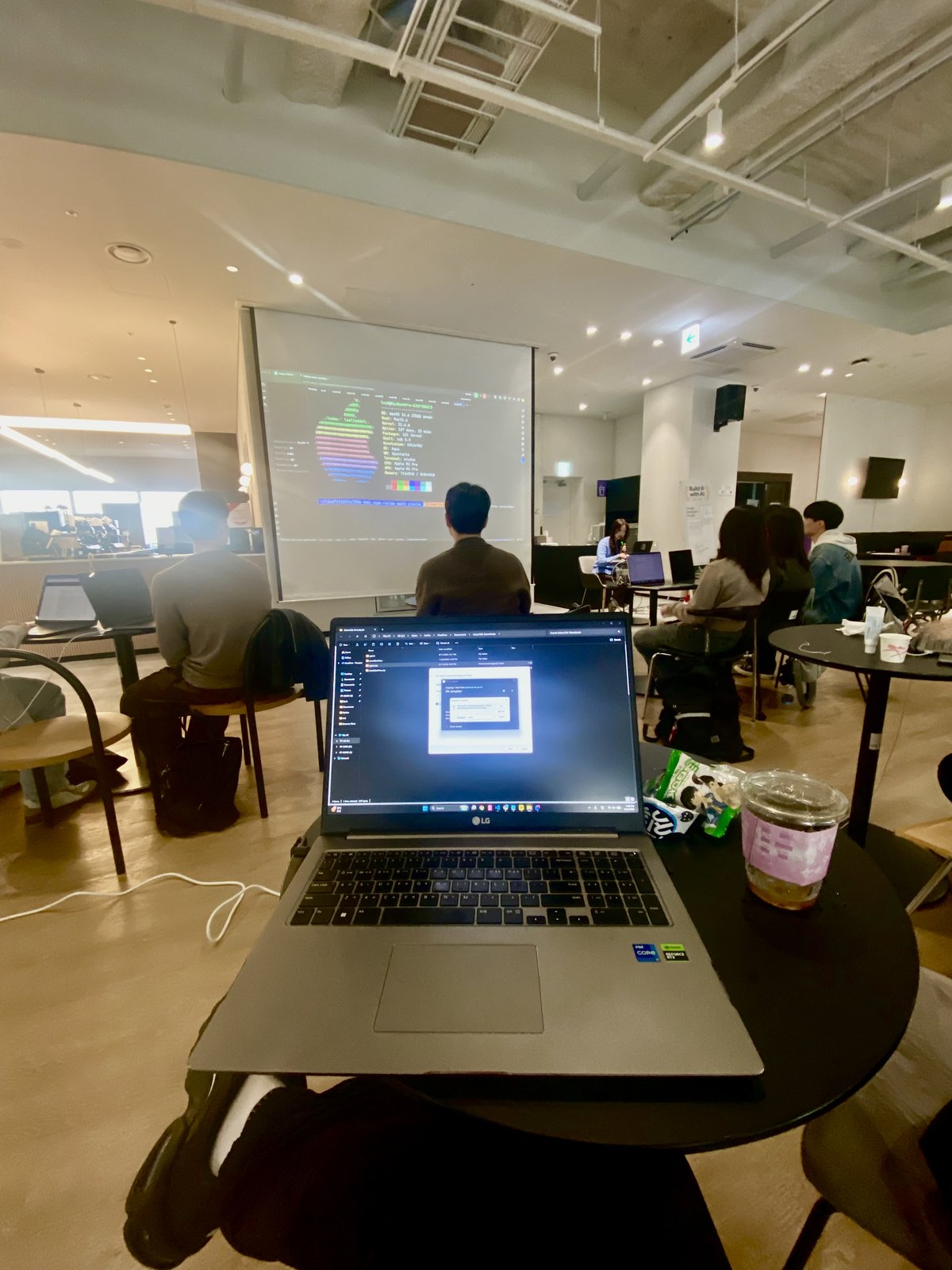
Heads down during the hands-on session.
The heart of the day was a hands-on codelab where we built simple AI agents using Kotlin. We worked through it step by step — it's built on Koog, a Kotlin framework for agents — and gradually put together an AI code-review agent that could actually do things instead of just chatting back. If you've only ever wired up a chatbot before, this is a genuinely different way of thinking, and that was the first big "aha" of the day.
🔗 Codelab: Build with AI — Kotlin Agents Codelab
What stuck with me
- Agents ≠ Chatbots. A chatbot answers; an agent acts. It can use tools, make decisions, and carry out multi-step tasks on its own. Once that clicked, a lot of things fell into place.
- Tools (function calling) make LLMs actually useful. On their own, LLMs just generate text. Give them tools — functions to fetch data, run code, call an API — and they jump from "neat demo" to "actually solves problems."
- System design matters as much as the model. Prompts, memory, and the agent loop are where the real engineering lives. A good agent isn't a clever prompt — it's a well-designed loop that decides, acts, observes the result, and decides again.
- A2A multi-agent systems are the next step. Instead of one giant agent doing everything, multiple specialized agents can collaborate, agent-to-agent (A2A). It's a surprisingly natural way to split a big problem into small, focused pieces.
Swag, snacks, and good people
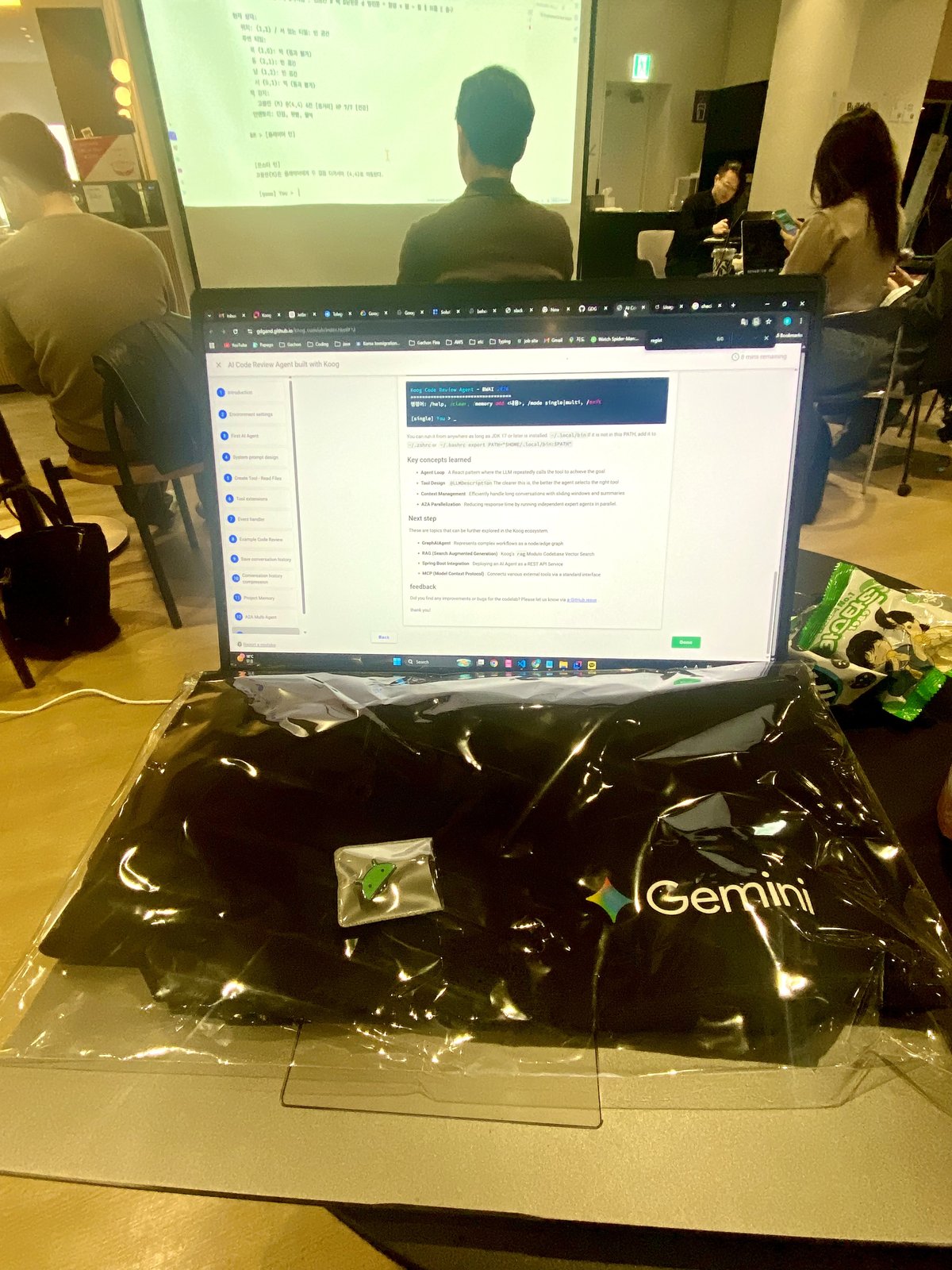
The codelab on screen — next to the Gemini bag and Android pin I took home.
And yes — I went home with some nice swag too: a Gemini tote bag and an Android pin. Small things, but they put a smile on my face. (That's the codelab still open on my screen, if you're curious what we were building.)
Thank you
A huge thank you to GDG Korea Android and HyunWoo Lee for such a great session. Events like this are a reminder that the best way to learn something new isn't to read about it — it's to sit down, open your editor, and build it alongside other people.
I left with a head full of ideas and I'm already looking forward to building more agents. If you've been curious about AI agents but haven't tried building one yet, grab that codelab and give it a shot — you'll learn more in one afternoon of building than in a week of reading. See you at the next one. 🚀
Blog List